

Dining Room Design Ideas for a Stylish and Functional Home
Looking for fresh dining room design ideas? Creating a beautiful dining room starts with strong foundations. Smart choices in furniture, layout, and lighting make a functional and inviting space. These elements work together. They define your room's character, ensuring comfort and visual appeal.
Crafting the Core: Furniture, Layout, and Lighting Foundations
Selecting Your Statement Dining Table
Your dining table usually serves as the room's main focus. It's a key part of any successful dining room design idea. Its size, shape, and material greatly influence both function and style. For most UK homes, aim for at least 90 centimetres of clear space around the table. This ensures comfortable movement for guests.
Choose a table shape that fits your room's dimensions. Rectangular tables work well in longer, narrower rooms. Round or oval tables encourage conversation in smaller or square spaces.
Think carefully about your material choices. Solid wood brings warmth and classic appeal to any setting. Glass tops offer a modern, airy feel. Ceramic or stone options provide a contemporary, durable surface. Reclaimed wood tables also add unique character.
Comfort and Style: Choosing Dining Chairs
Dining chairs must balance comfort with your chosen look. This is crucial for effective dining room design ideas. Ergonomics are vital. Seat heights typically range from 45 to 50 centimetres for optimal comfort with standard tables. Look for chairs with good back support for longer dinners.
Mix-and-match strategies add personality to your dining area. For example, use two upholstered carver chairs at each end. Complement them with armless chairs along the sides. Benches also offer a relaxed seating option on one side of a rectangular table. Current material trends include soft velvets, textured boucle fabrics, and natural rattan weaves.
Illuminating Your Dining Area
Good lighting truly transforms a dining space. It greatly enhances overall dining room design ideas. A central pendant light or chandelier typically hangs directly above the table. Its width should ideally span about half to two-thirds of the table's width for visual balance. Hang it roughly 75 to 90 centimetres above the tabletop. This ensures it won't block anyone's view.
Beyond the main fixture, add ambient lighting. Wall sconces or floor lamps can soften the overall mood. Dimmers are essential for adjusting brightness for different occasions. For a cosy atmosphere, choose warm white bulbs. Around 2700-3000 Kelvin creates an inviting glow for your meals.
Defining Zones with Rugs
A well-chosen rug effectively grounds and defines your dining area. This is an important aspect of many dining room design ideas. Selecting the correct size is crucial. The rug should extend at least 60 to 75 centimetres beyond the table on all sides. This ensures dining chairs stay completely on the rug, even when pulled out. Many design professionals recommend this dimension to prevent chairs from catching.
For materials, a low-pile rug is practical and easier to clean in a dining setting. Wool rugs offer durability and a luxurious feel. Jute or sisal options bring natural texture and warmth. Always consider the rug's colour and pattern in relation to your furniture. It should complement your table and chairs, adding depth without overwhelming the space.
With these foundational elements in place, let's explore current trends and smart solutions. These can further enhance your dining space with more dining room design ideas.
Embracing Trends and Smart Solutions for Modern Dining
Current Design Trends for Dining Spaces
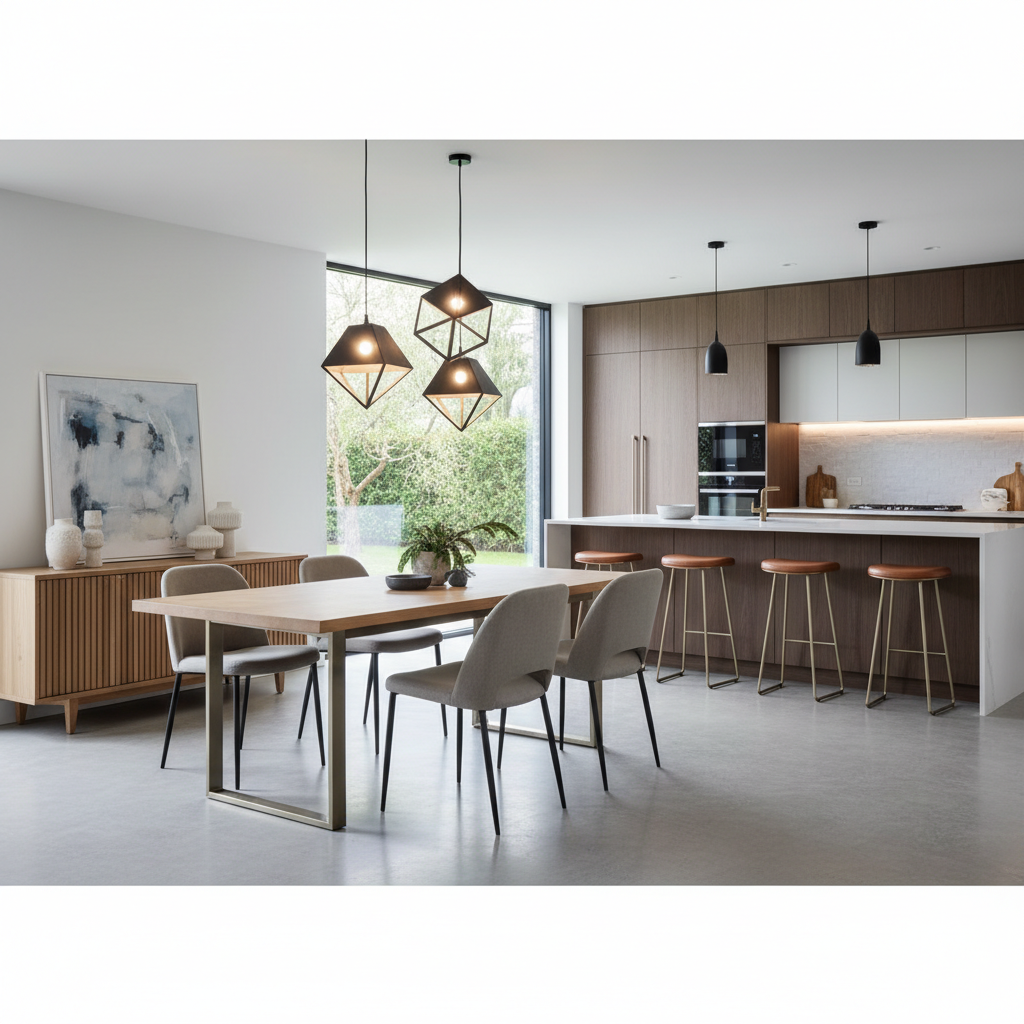
Today's dining rooms often blend comfort with clean design. Exploring current dining room design ideas reveals exciting possibilities. Japandi combines Japanese minimalism with Scandinavian warmth. This style uses clean lines, natural wood tones, and a neutral colour palette. Think simple, functional furniture with a serene feel. For example, a light oak dining table pairs well with understated ceramic dinnerware.
Scandinavian design remains popular for its bright, airy feel. It prioritises functionality, light wood, and simple forms. White walls and pale furniture create an inviting, spacious look. A round birch table and minimalist chairs fit this style perfectly. They bring a sense of calm to any home.
Modern Farmhouse blends rustic charm with contemporary finishes. Distressed wood, shiplap accents, and industrial-inspired lighting are common. This trend often features reclaimed wood tables with comfortable, upholstered seating. It offers a cozy yet refined atmosphere, appreciated by homeowners for its welcoming appeal.
For those who love variety, the Eclectic style allows for personal expression. It encourages mixing different periods, textures, and colours. A mid-century modern table might pair with mismatched chairs from various eras. This approach creates a unique, curated space that tells a personal story. It thrives on individuality and creativity.
Optimizing Small Dining Rooms
Small dining areas need smart planning to maximize every inch. They offer unique dining room design ideas. Push a rectangular dining table against a wall to create more floor space. This opens up movement and can transform a tight spot. Consider built-in banquette seating; it saves space and adds comfortable seating.
Multi-functional furniture is a game-changer for compact spaces. Extendable dining tables are essential. They let you expand seating only when needed. Some console tables even convert into full-sized dining tables. Storage benches provide extra seating and hide clutter, offering incredible versatility.
Using corners effectively unlocks hidden potential for dining room design ideas. A small round table fits well into a corner nook. Or, built-in corner banquettes offer a cosy, efficient dining spot. You can also add slim corner shelves for decorative items or extra storage. Mirrors on a wall can visually expand the room, making it feel larger and brighter.
Color Palettes and Material Play
Current colour palettes for dining rooms lean towards warmth and natural tones. This guides many modern dining room design ideas. Earthy shades like terracotta and olive green create a grounding effect. Soft blues offer a calming backdrop. Warm neutrals such as beige and cream keep spaces inviting. Deep jewel tones, like sapphire or emerald, work well for accent pieces or feature walls.
Natural materials bring authenticity and texture. Light oak and rich walnut are popular choices for dining tables and sideboards. Stone elements, such as marble tabletops or quartz countertops, add a touch of luxury. Concrete accents can introduce an industrial edge to modern designs, offering durability and timeless appeal.
Textural elements enhance the room's sensory experience. Velvet upholstered chairs add a rich, luxurious feel. Boucle fabric offers a soft, inviting texture for dining benches. Rattan, seen in chairs or pendant lights, brings an organic vibe. Combining these textures, like wood with boucle and a woven rug, creates depth and warmth.
Beyond these structural and aesthetic considerations, thoughtful accessorizing on a budget can truly personalize your dining room. This offers even more dining room design ideas.
Adding Personality and Value: Accessorizing on a Budget
Elevating Your Walls: Art, Mirrors, and Wallpaper
Walls provide a blank canvas for design. Thoughtful wall decor enhances the entire dining space. It's a simple but effective dining room design idea. Consider a gallery wall using a mix of framed prints, personal photos, and small mirrors. This creates visual interest and tells a story. Look for high-resolution digital art prints you can frame affordably.
Strategically placed mirrors significantly brighten a room. They reflect light, making smaller dining areas feel more expansive. A large round or rectangular mirror opposite a window often yields the best results. For a dramatic touch, a peel-and-stick wallpaper accent wall introduces texture and pattern without permanent commitment. It defines a zone and adds depth.
Functional Decor: Storage and Display
Dining room furniture serves more than just eating. Pieces like buffets and sideboards offer essential storage. They also provide a surface for decorative display. Use these units to house linens, serving dishes, or seldom-used glassware. Keep the top uncluttered for visual appeal.
Open shelving, such as étagères, allows for curated displays. Arrange decorative bowls, small sculptures, or cherished heirlooms. Varying the heights and textures of your displayed items adds dynamism. A well-styled sideboard can become a focal point, merging utility with artistic expression.
Smart Styling: Table Settings and Centerpieces
The dining table itself is a prime area for styling. This forms an important part of your overall dining room design idea. For everyday meals, simple placemats and washable fabric napkins add warmth. Choose a centerpiece that does not obstruct conversation. A low bowl of fresh fruit or a small potted plant works beautifully.
Special occasions invite more elaborate settings. Layered plates, elegant glassware, and candlesticks elevate the experience. Consider seasonal elements for your centerpiece. A vase of fresh spring flowers or autumn leaves provides natural beauty. A collection of varying height candles creates an intimate, sophisticated ambiance.
Budget-Savvy Design Strategies
Transforming your dining room doesn't require new purchases. Budget-savvy dining room design ideas can still deliver big impact. Embrace DIY projects for significant savings. Painting an old hutch or updating chair cushions can refresh a tired space. Upcycling vintage finds from charity shops or online marketplaces offers unique character. The global second-hand goods market offers endless possibilities.
Strategic sourcing is key for budget design. Explore clearance sales, flea markets, and online resale platforms for hidden gems. Repurposing existing furniture also makes an impact. An unused console table might become a chic bar cart. Creative furniture placement, like angling a sideboard, can alter the room's perception without spending a penny.
Conclusion
These dining room design ideas offer a path to a more stylish and functional home. Focus on foundational elements, embrace current trends, and accessorize smartly. You can create a space that truly reflects your personal taste. Remember, thoughtful design doesn't require a huge budget. Creativity and smart choices make all the difference. Enjoy crafting a dining room that you and your guests will love for years to come.
About This Article
Editorial Disclosure: This article was researched and written by our content team to provide helpful, accurate information about dining room design ideas. We regularly review and update our content to reflect the latest industry developments and best practices.